Il Borgo
4,000 years of history on one glorious hilltop
A Village Built on Three Powers
Panicale sits at 431 metres above sea level on a sun-soaked hilltop in western Umbria, gazing north across the glittering expanse of Lake Trasimeno. Officially designated one of the Borghi più belli d'Italia (Most Beautiful Villages of Italy) and awarded the Orange Flag by the Italian Touring Club, it is one of those rare places where every stone has a story and every view stops you in your tracks.
The village's origins reach back to at least 2000 BC, though the walled settlement as we see it today was founded in the 9th century AD. Its layout is instantly recognisable from above — three concentric elliptical rings of medieval walls, built around three piazzas arranged at ascending elevations. Each piazza represented a different sphere of power: economic, religious, and political.
The Three Piazzas
Piazza Umberto I — The Economic Heart
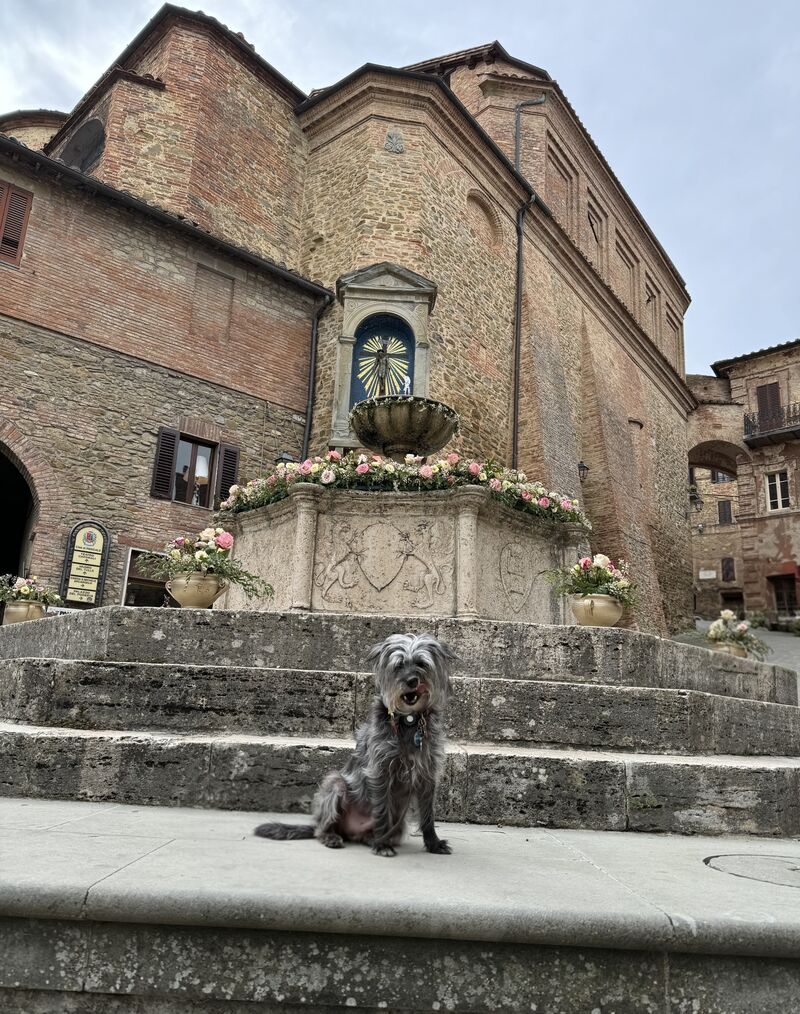
At the village's base sits the main square: Piazza Umberto I. Here you'll find the octagonal travertine Fontana Maggiore, originally built as a cistern in 1473 and converted to a fountain in 1903. It bears the coat of arms of Panicale — a tower framed by two ears of corn. The 13th-century Palazzo Pretorio stands at one side. Today the piazza is the social heart of the village, ringed with café terraces and restaurants where locals and visitors gather for aperitivo as the sun turns the stones gold.
Piazza San Michele Arcangelo — The Spiritual Centre
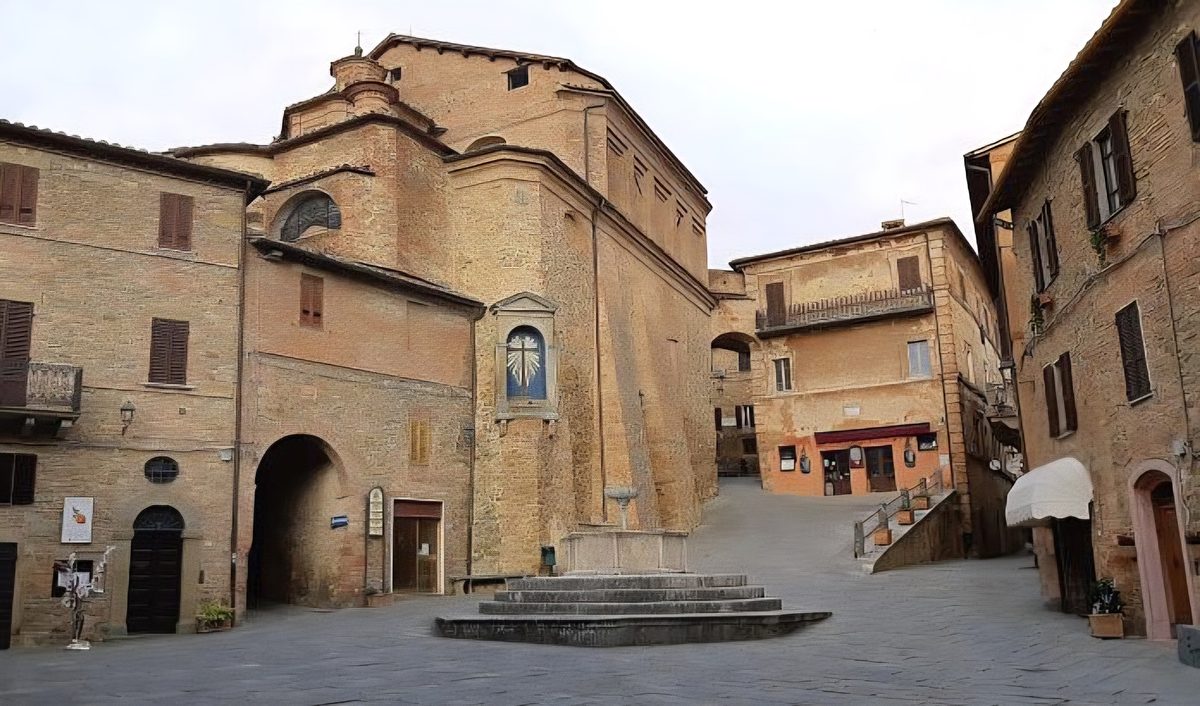
One step higher on the hill brings you to the seat of religious power. The baroque Collegiata di San Michele Arcangelo dominates this piazza, sheltering Masolino da Panicale's Annunciation inside. The campanile (bell tower) is the village's tallest vertical element, visible for miles around. A plaque on a modest house nearby marks the birthplace of the mercenary captain Boldrino da Panicale.
Piazza Masolino — The Political Summit
At the highest point of Panicale stands the 14th-century Gothic-Lombard Palazzo del Podestà. From this piazza you command the best 360-degree panorama in the village — Lake Trasimeno stretches to the north, and the Nestore Valley unfolds to the south. On a clear day, the view alone is worth the climb.

Famous Sons & Daughters
Pietro Vannucci "Il Perugino" (1446–1524) — The family of the "Divine Painter" came from Panicale before settling in nearby Città della Pieve. Teacher of Raphael and one of the greatest painters of the Italian Renaissance, Perugino left his celebrated fresco Martyrdom of Saint Sebastian (1505) covering an entire wall of the Chiesa di San Sebastiano, just outside the village walls. He died of plague near here in 1523.
Masolino da Panicale (c.1383–1447) — Renaissance painter, friend and possible teacher of Masaccio. Born Tommaso di Cristoforo Fini right here in Panicale. His Annunciation hangs in the Collegiata San Michele Arcangelo.
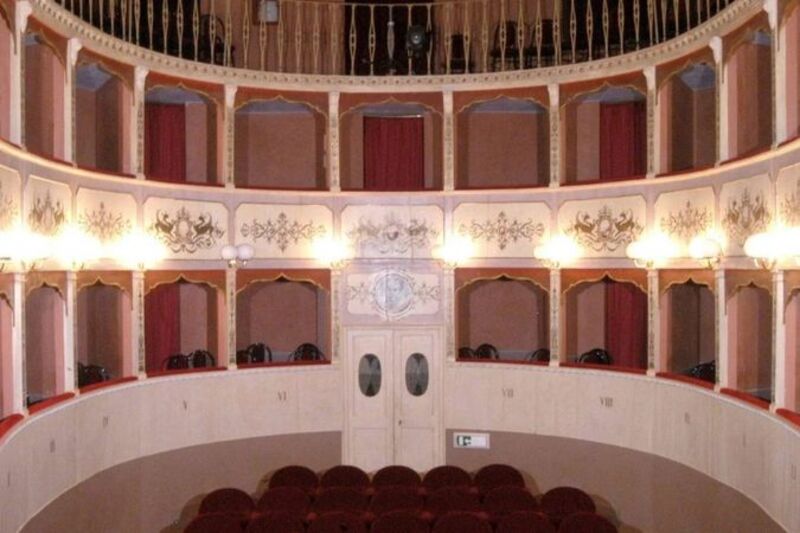
Boldrino da Panicale (1331–?) — One of the most colourful figures in Italian medieval history. A mercenary captain known as "the Flagellator of the March," so feared that towns paid him simply to keep moving. Born in Piazza San Michele (plaque on house). Depicted on the curtain of the Teatro Caporali receiving the keys of Perugia.
Cesare Caporali (1530–1601) — Comic poet, born in Panicale, who died in Castiglione del Lago. The village's exquisite opera house is named in his honour.
Getting Here
Panicale is 40km from Perugia and 15km from Città della Pieve. The nearest train station is Chiusi (15km) — bus or taxi onward. By car from the north: A1 motorway → Valdichiana exit → Perugia highway → Castiglione del Lago exit → SS71 → follow signs to Panicale. From the south: A1 → Chiusi-Chianciano Terme exit → Castiglione del Lago → Panicale exit.
Municipality: Via Vannucci 1 · Tel: +39 075 837951